
There is a particular kind of September energy that makes gardeners dangerous. The tomatoes are tired. The borders are shaggy. The paths are disappearing under late growth. Suddenly the pruners feel like a reasonable answer to everything.
Then comes the satisfying cut. A lilac gets rounded. A forsythia gets shortened. A bigleaf hydrangea is made tidy for fall. The shrub looks neater by dinner. The mistake does not show itself until April, when the plant leafs out politely and refuses to flower.
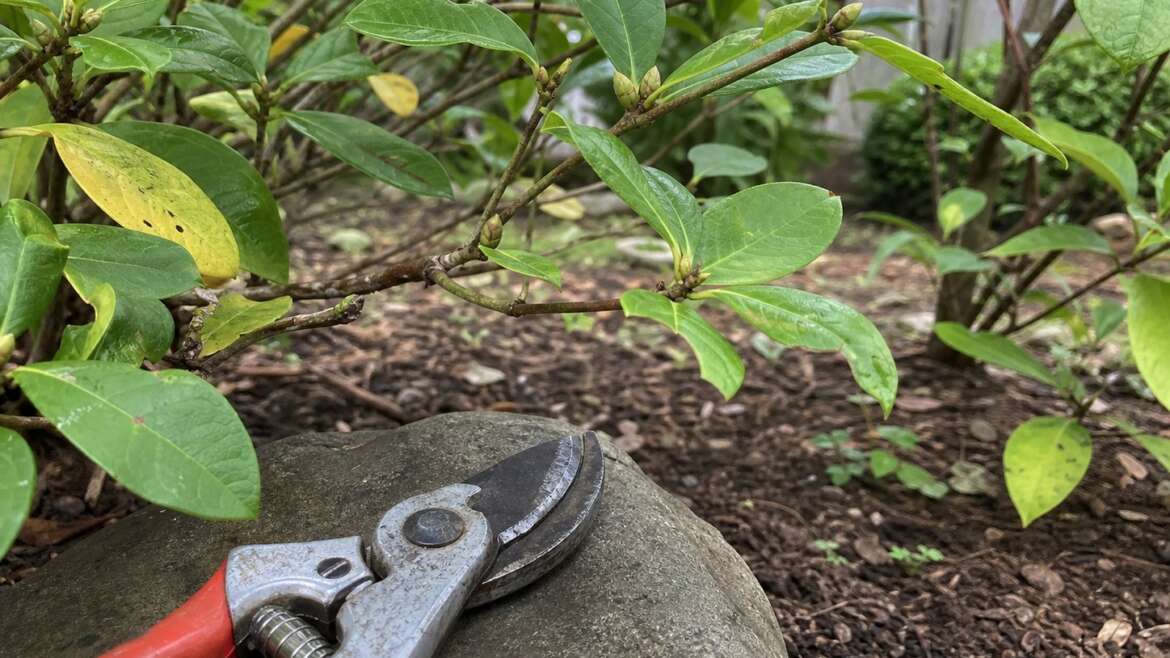
This is the trap: many of the shrubs people most want in spring are already carrying next spring’s flowers by September. The buds are small. They are easy to mistake for ordinary twig texture. But if you shear them off now, the plant cannot simply replace them in March. You have not killed the shrub. You have removed the show.
The shrub has already made part of spring
Gardeners often think of spring flowers as something a plant decides to make in spring. For many shrubs, that is not how the calendar works. Iowa State University Extension explains that spring-flowering shrubs are best pruned immediately after flowering because that timing allows them to set new flower buds for the following season.1
The important phrase is “following season.” A lilac that blooms in May has usually prepared those flower buds during the previous growing season. A forsythia that makes yellow fireworks on bare stems did not build that display during a warm week in April. It stored the possibility earlier, on wood that survived the winter.
Colorado State University Extension describes spring-flowering shrubs as blooming on one-year-old wood, with flower buds developing from midsummer through fall, overwintering, and opening the next spring.2 That makes September a surprisingly high-stakes month. The garden looks tired, but some shrubs are already holding their most expensive work.
Why this mistake is so easy to make
The cruel part is that the wrong cut can look like good care. A shrub that has bloomed hard, grown hard, and sprawled through August may genuinely need attention. Branches cross. Walkways narrow. A plant that was charming in May can look like it is trying to take the house by September.
But tidiness is not the same as timing. When you trim a spring bloomer in September, you are not just shortening green growth. You may be cutting off the buds that would have become next year’s flowers. This is especially easy with hedge shears, which remove the ends of many stems at once. The shrub becomes a smooth green shape, and the flower buds go into the compost bin.
Rutgers Cooperative Extension is blunt about the season: do not prune spring- or summer-flowering shrubs in late summer or early fall, after mid-August through leaf fall, because pruning can stimulate new growth that may not harden off before winter.3 For spring bloomers, there is a second penalty. You may also remove the flower buds already sitting on the stems.
The old wood question
The fastest way to avoid the September mistake is to ask one question before cutting: does this plant bloom on old wood?
Old wood means growth made in a previous season. If a shrub flowers early in the year before it has had much time to grow new stems, there is a good chance the flowers were already packed into buds on last year’s wood. University of Georgia Extension gives the same practical rule: azaleas, forsythias, lilacs, rhododendrons, and spring-flowering spireas should be pruned after flowering, because pruning before their next bloom removes potential flowers.4
This does not mean every spring shrub is fragile or that one accidental cut ruins a plant forever. It means the timing of pruning changes what you get from it. Prune right after bloom and the plant has the rest of the growing season to make new flowering wood. Prune in September and you are editing next spring with almost no time for the shrub to rewrite the page.
Hydrangeas are where people get trapped
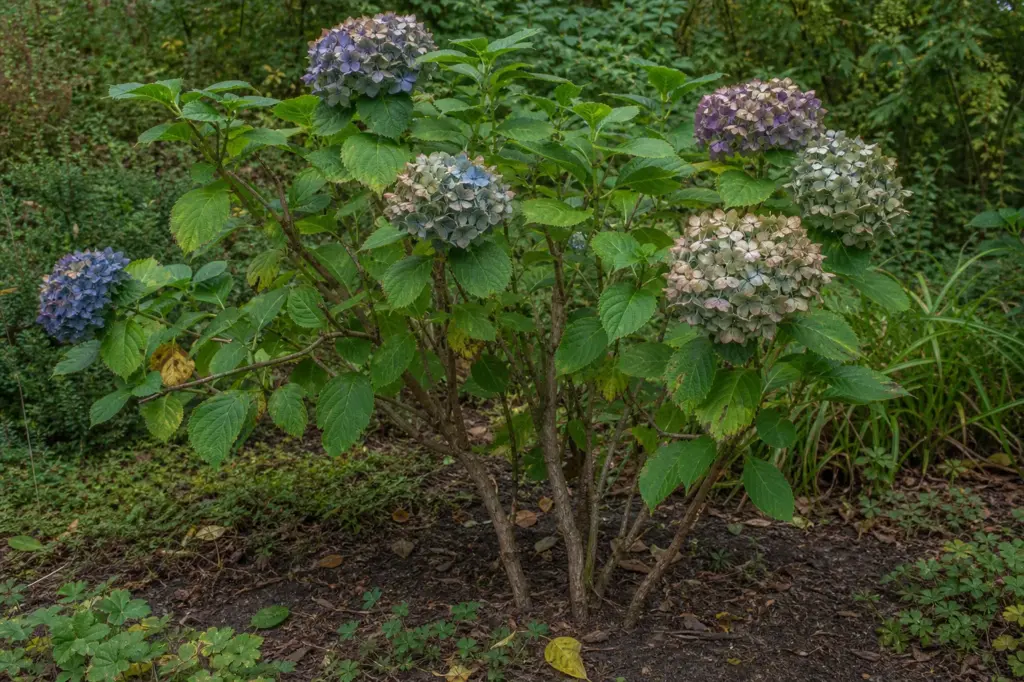
Hydrangeas deserve their own warning because they have made gardeners suspicious of pruning advice. Some hydrangeas bloom on old wood. Some bloom on new wood. Some modern cultivars can rebloom, which adds another layer of confusion.
University of Maryland Extension separates the timing clearly: old-wood hydrangeas, such as bigleaf, mountain, oakleaf, and climbing hydrangeas, are pruned just after flowers fade, while new-wood types, such as smooth and panicle hydrangeas, are pruned in late winter or early spring.5
That distinction matters more than the word hydrangea on the plant tag. A panicle hydrangea can usually forgive late-winter shaping because its flowers form on new growth. A bigleaf hydrangea may be holding next year’s flower buds on stems you are tempted to shorten in September. If you do not know which kind you have, the least destructive move is to wait, observe when it blooms, and prune lightly after the bloom window instead of guessing with shears.
The exceptions that are actually worth making
There are cuts that should not wait for the perfect pruning season. Dead, diseased, damaged, and crossing or rubbing branches are not the same as cosmetic reshaping. Rutgers notes these problem limbs can be removed at any time.3 If a branch is split, diseased, scraping paint, blocking a path, or poking someone in the eye whenever they take out the compost, deal with it.
The trick is to make the necessary cut and stop. Do not let one broken branch become a full haircut for the whole shrub. September pruning should be more like first aid than sculpture. Remove what is clearly wrong. Leave the rest of the plant’s stored spring alone.
If the shrub is truly out of control
What about the lilac that has become a fragrant tree? What about the forsythia that blooms only at the top and has a thicket of old stems below? Sometimes the answer is not a light trim after flowering. It is renewal pruning, done with a plan.
Iowa State University Extension describes a three-year rejuvenation method for large, overgrown deciduous shrubs: remove one-third of the large old stems at ground level in late winter or early spring, then continue over the next two years while retaining strong new shoots.6 This approach can temporarily reduce flowering, but it renews the plant from the base instead of shaving the outside into a leafy shell.
Lilacs are a good example. University of Illinois Extension gives the same timing for lilacs and forsythias: prune after bloom, because flower buds for next year begin forming soon after this year’s flowers fade.7 If a lilac is old and woody, the better long game is to remove some of the oldest stems near the ground after bloom or use a deliberate renewal plan, not to clip the outer tips every September and wonder why the flowers keep retreating upward.
What to do instead in September
The satisfying September habit is not cutting. It is noticing. Walk the garden with pruners in your pocket if you must, but let your eyes do most of the work. Look at the tips of lilac stems. Look at the fat buds on magnolia. If those details are unfamiliar, a closer guide to reading winter buds explains what bud shape, arrangement, and scars can tell you before leaves return. Look at hydrangea canes and ask whether they are old-wood or new-wood types. Look at the shrub’s natural shape before deciding it has failed at being a ball.
If a branch is dead, remove it cleanly. If a stem is in the path, cut only what has to go. If a shrub simply looks loose, tired, or asymmetrical, make a note for the right season. A tag tied to a branch in September can save more flowers than an hour of enthusiastic pruning.
There is plenty of real September work to do without stealing from spring. Water shrubs that are entering fall dry. Refresh mulch without piling it against the stems. Remove weeds before they seed. Photograph overgrown plants so you can remember their size after the leaves drop. Sharpen and clean the pruners, then put them where you can find them when bloom has finished next year.
The two-second test before any cut
Before cutting a flowering shrub in September, ask yourself three things. Did it bloom in spring or early summer? Do I see plump buds or short flowering spurs on the stems? Am I pruning for plant health, or just because the garden looks untidy?
If the answers point toward spring bloom and cosmetic tidying, close the pruners. That small act of restraint can feel less productive than cutting, but it is often the move that gives you flowers. The September shrub may look messy for a few more weeks. Next April or May, it may look like you knew exactly what you were doing.
That is the secret behind this mistake. It does not punish impatience immediately. It waits until the season when everyone is looking. A shrub can survive a bad September haircut. Your spring display may not.
References
- Iowa State University Extension: Proper Time to Prune Trees and Shrubs
- Colorado State University Extension: Pruning Flowering Shrubs
- Rutgers Cooperative Extension: Pruning Flowering Shrubs
- University of Georgia Extension: Prune Spring-Flowering Shrubs After the Flower Show Ends
- University of Maryland Extension: Pruning Hydrangeas
- Iowa State University Extension: Pruning Large, Overgrown Shrubs
- University of Illinois Extension: Prune properly, your forsythia and lilac shrubs will thank you