
A medicinal herb garden can be a beautiful and useful part of a home landscape, but it should begin with honesty. Growing chamomile, calendula, mint, sage, thyme, or echinacea does not make a person a clinician. It makes a person a gardener with plants that have histories, flavors, fragrances, and sometimes biologically active compounds.
That distinction protects the pleasure rather than spoiling it. MedlinePlus cautions that “natural” does not automatically mean safe: herbs can cause harm and can interact with prescription or over-the-counter medicines.1 The sensible beginner’s project is therefore a well-identified, well-grown herb bed—not a homemade pharmacy with a treatment promised for every jar.
Decide what the garden is for
Begin with uses that remain worthwhile even if no plant ever becomes a remedy. Fragrance beside a path, flowers for insects, leaves for familiar cooking, material for botanical study, and the discipline of recording a harvest are all good reasons. NC State Extension presents medicinal plants as garden and landscape plants while distinguishing their cultivation from their histories of traditional use.2
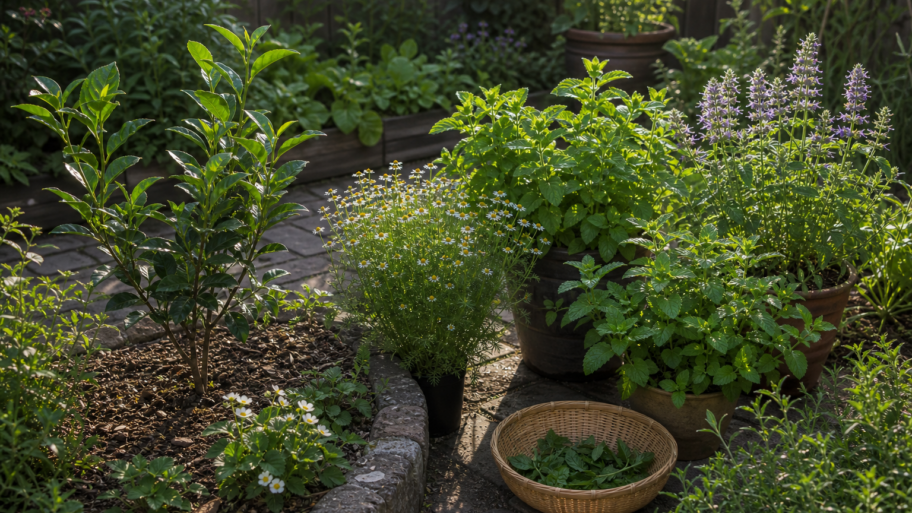
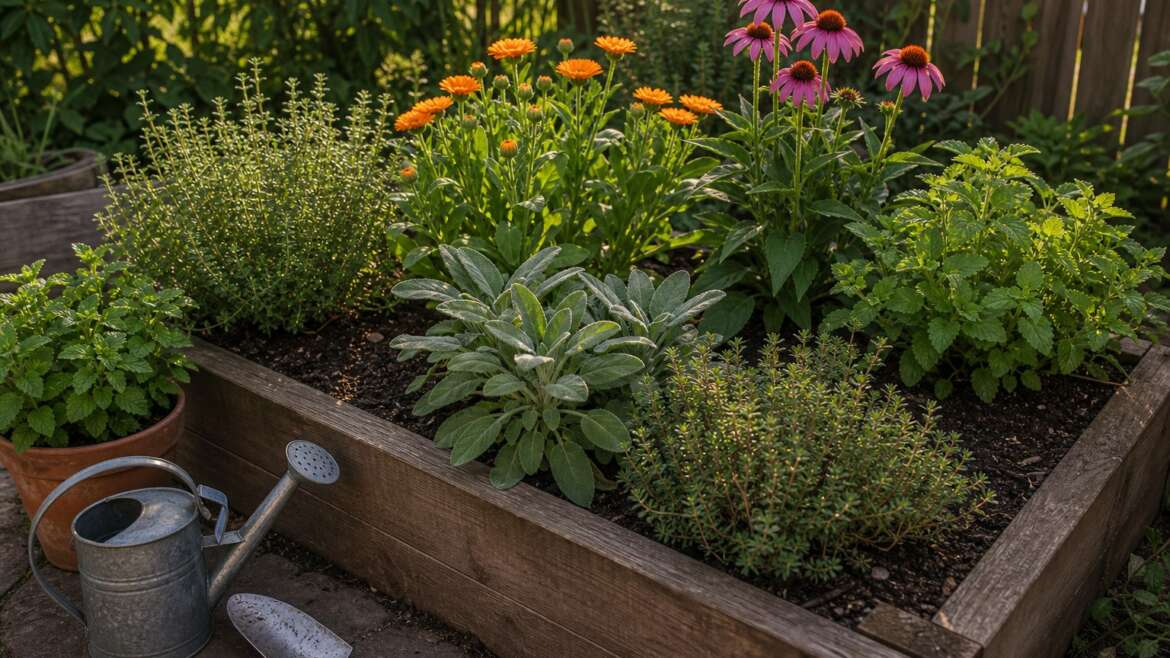
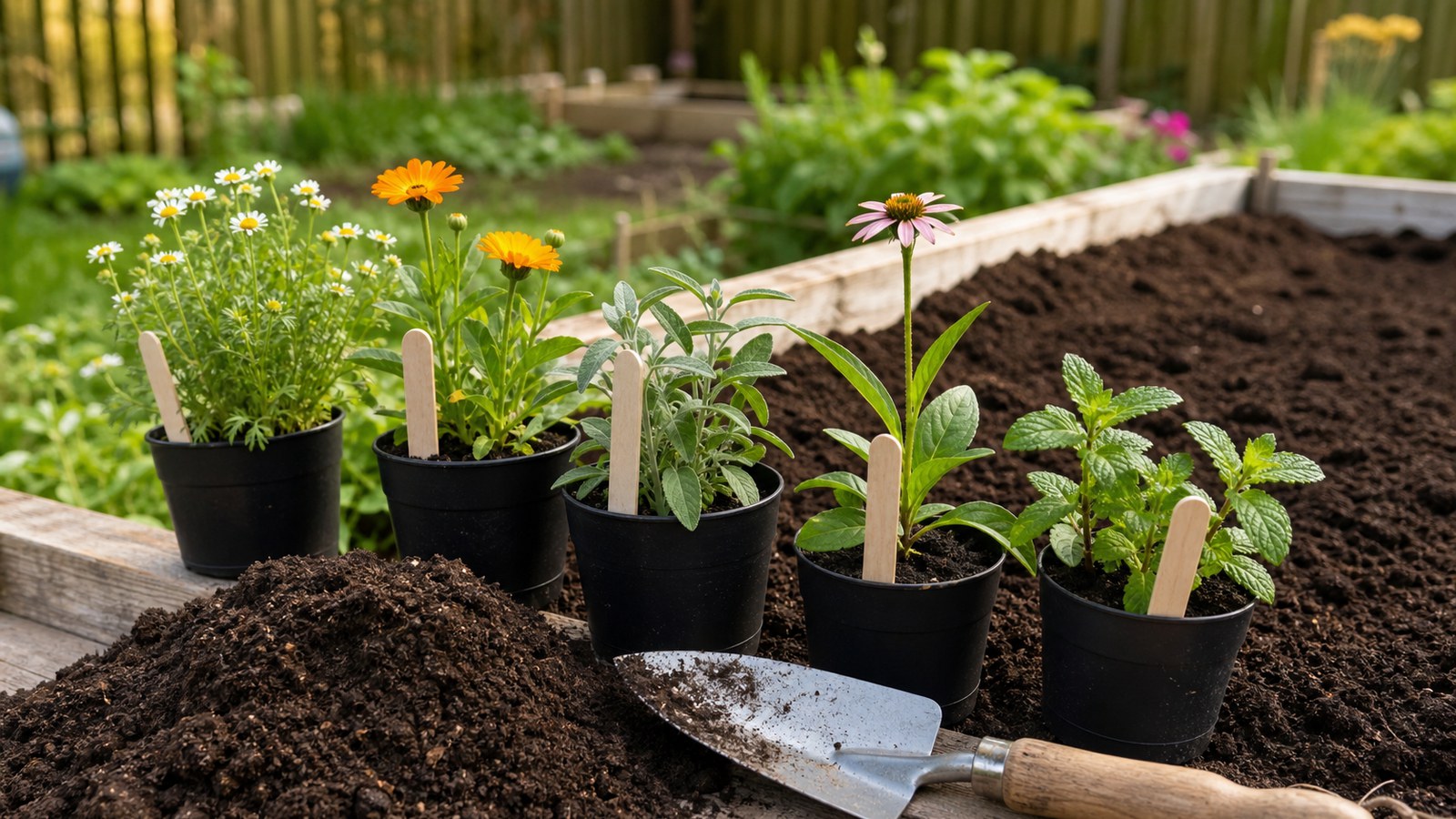
A short list is easier to identify and care for than a crowded catalogue. Choose perhaps four or five plants, then write a plain purpose beside each: kitchen sage for cooking, peppermint for flavor, echinacea for summer flowers, calendula for color, or chamomile for its small daisy-like flowers. A purpose is not a medical claim. It is a reason the plant earns its space.
Buy a name, not a promise
Keep the nursery label and add the botanical name to your garden map. “Chamomile” can refer to German and Roman chamomile, while “mint” covers many species and hybrids. Products, studies, and safety notes may concern one species, one plant part, or one preparation; they do not automatically transfer to every plant sharing a common name.
Buy from a nursery or seed supplier that names the plant clearly. Do not harvest a volunteer because it resembles an herb in a photograph, and keep medicinal candidates separate from toxic ornamentals. If a label disappears, identify the plant again before using it. A blank jar is inconvenient; a confidently mislabeled jar is dangerous.
Group plants by horticulture
The word medicinal does not describe a growing condition. Group plants by light, drainage, water, mature size, and local winter or summer limits. Oregon State University Extension advises that most herbs need well-drained soil and at least six hours of sun, while mint is best contained because it spreads quickly.3 Those are starting points, not substitutes for the label or regional extension advice.
Give spreading mint its own pot or a place where wandering stems can be managed. Make sure every container has a drainage hole. Put plants that prefer sharper drainage together, and do not force a moisture-loving herb to share the same watering routine. The related guide to caring for a medicinal herb garden goes further into grouping, watering, pruning, and disease checks.
Design for a clean, traceable harvest
Treat the bed as seriously as a kitchen garden. Learn the site’s history before planting anything intended for food or drink. Where lead or another legacy contaminant is plausible, test the soil and follow local public-health or extension advice. The US Environmental Protection Agency recommends testing soil used for food crops and using raised beds or containers with clean soil where lead levels are higher.4
Keep the bed away from pet toilet areas, spray drift, dirty runoff, and heavy road dust. Make a path or firm standing place so harvest does not require stepping among the plants. Use separate, clean snips; collect only healthy material you can name; and note the species, plant part, and date. If a plant has been treated with a pesticide, the label—not guesswork—determines where, how, how often, and under what precautions the product may be used.5
Dry and store only what you can identify
Harvesting creates a second identification problem: stems and petals become harder to recognize once dry. Keep each species and plant part separate. Label the container before filling it, including the harvest date. Discard material that is diseased, contaminated, musty, or uncertain; no amount of drying turns a doubtful harvest into a safe one.
Drying is preservation, not decoration. The National Center for Home Food Preservation advises exposing herbs to warm, dry air in a well-ventilated place and notes that moist, tender-leaved herbs can mold if they are not dried quickly.6 Store completely dry material in clean, airtight containers in a cool, dry, dark place. The companion article on preparing and storing a garden herb harvest covers the practical handoff from bed to jar.
Keep health claims attached to evidence
Traditional use is part of a plant’s history, not proof of clinical effectiveness. The preparation matters too: a fresh leaf, tea, standardized capsule, tincture, and essential oil are not interchangeable. A trial of a measured extract cannot establish the dose or effect of material harvested from a garden.
Chamomile is a useful example of restraint. The National Center for Complementary and Integrative Health says research across promoted uses has not produced enough reliable evidence to rate its clinical usefulness.7 Echinacea is better studied for colds, yet NCCIH says it may only slightly reduce the chance of catching one and remains uncertain about whether it shortens a cold.8 “Promising,” “traditional,” and “proven” are different words for different evidence.
Read the safety record before any preparation
Check an authoritative monograph for the exact species and form before medicinal use, then discuss it with a clinician or pharmacist if you take medicines. Pregnancy, breastfeeding, childhood, chronic illness, and allergy history can change the question. Chamomile can trigger allergic reactions, especially in people sensitive to ragweed and related plants, and reported or suspected drug interactions include warfarin and sedatives.7 Echinacea can also cause allergic reactions and may interact with some medicines, including immunosuppressants.8
Keep ordinary leaves and flowers conceptually separate from concentrated essential oils. Poison Control warns that many essential oils can irritate skin and some can cause serious poisoning when swallowed or otherwise misused.9 Store oils, supplements, and dried material out of reach of children and pets. If someone eats an unidentified plant or swallows an essential oil, contact your local poison center promptly rather than waiting for symptoms; use emergency services for severe symptoms.
Do not let the garden delay care
A herb bed can support cooking, observation, outdoor routine, and small sensory comforts. It cannot diagnose the cause of pain, fever, bleeding, breathlessness, a spreading rash, or another worrying change. NCCIH advises against using an unproven product or practice as a substitute for conventional treatment or as a reason to postpone seeing a health care provider.10
Kept honest, a medicinal herb garden is deeply rewarding. It teaches plant identification, site matching, harvest timing, scent, pollinator behavior, drying, record keeping, and restraint. The restraint is not an apology for the garden. It is part of the craft.
References
- MedlinePlus: Herbal Medicine
- NC State Extension Homegrown: Growing Medicinal Plants in the Home Garden
- Oregon State University Extension: Herbs—Perennial
- US Environmental Protection Agency: Lead in Soil
- US Environmental Protection Agency: Introduction to Pesticide Labels
- National Center for Home Food Preservation: Herbs
- NCCIH: Chamomile—Usefulness and Safety
- NCCIH: Echinacea—Usefulness and Safety
- Poison Control: Essential Oils—Poisonous When Misused
- NCCIH: Are You Considering a Complementary Health Approach?